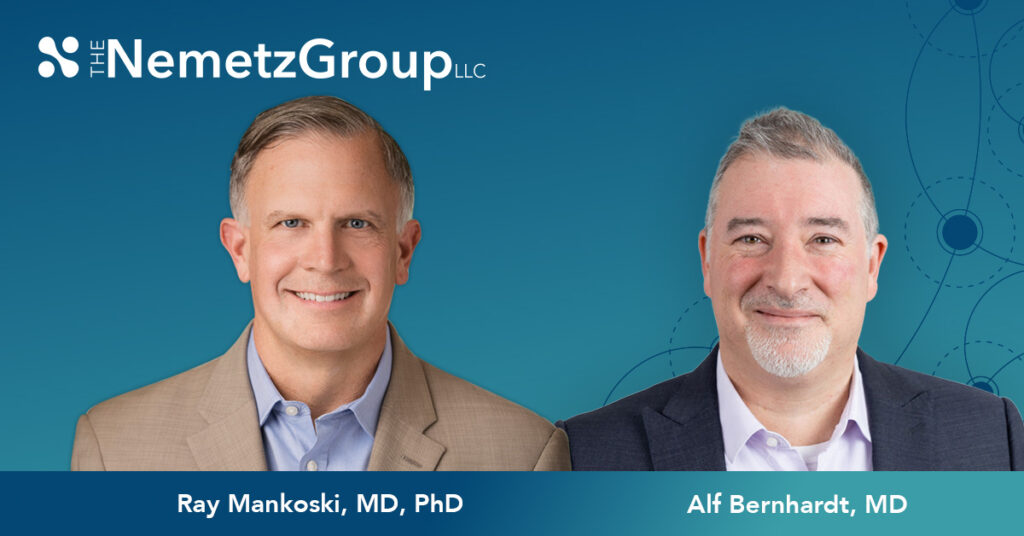
I’m really looking forward to this conversation with Dr. Ray Mankoski and Dr. Alf Bernhardt, our expert Medical Affairs leaders, to discuss what’s happening in the world of medical affairs today.
We’re going to focus this conversation primarily on the pre-commercial biopharma company that is passionately working to bring its product to market for the patients who will benefit.
For those who want the highlights first, here is the summary, although I encourage you to read (or listen) to the full conversation for its richness and nuance.
Newsletter Summary
- Medical Affairs is expanding its role in pre-commercial biopharma, moving beyond traditional MSL functions to support regulatory strategy, real-world evidence (RWE) generation, and early-phase development in close collaboration with clinical development and regulatory teams.
- Real-world evidence is now a regulatory necessity, not just a payer strategy. The FDA increasingly expects RWE (e.g., natural history data, expanded access program data) as part of confirmatory evidence packages, making early RWE planning critical to both regulatory approval and market success.
- Engaging non-investigator KOLs and influencers early is essential. Study investigators are often aligned with company strategy, but the real clinical practice challenges surface elsewhere. Medical affairs professionals are uniquely skilled at compliantly building relationships with a broader set of experts, providing market and patient perspectives that can’t be captured in a trial alone.
- Medical Affairs and New Product Planning (NPP) are complementary, not interchangeable. NPP focuses on how an asset fits within the company strategy; medical affairs focuses on how a therapy fits into clinical practice and in the context of available science. Both inform each other. Medical affairs’ physician/PhD lens is especially critical to identify realistic, market-specific treatment strategies that written content or AI alone cannot provide.
- Global and HTA considerations must be addressed earlier than most pre-commercial companies plan for. Even US-focused companies need data that will satisfy ex-US health technology assessments (HTAs), especially if they intend to partner internationally, and that data takes time to generate.
The overarching advice: start earlier. Both Ray and Alf emphasize that the biggest risk for pre-commercial companies is being singularly focused on a lean development program without planning for the additional data needed to support favorable pricing, clinical practice, and long-term market success. Early investment in medical affairs expertise is essential. Even a single FTE or experienced medical affairs consultant pays significant dividends later.
Sue Nemetz: To start the conversation with Ray and Alf, can you both speak to some of the shifts you’re seeing in the medical affairs discipline in pre-commercial companies today, and the implications of those trends going forward?
Ray Mankoski: There are two important ways that I’ve seen medical affairs expand how they’re working within companies lately, especially smaller biotech companies.
One is real-world evidence generation.
Prior to the past several years, especially for companies in rare disease and oncology, we were advising leaders to think about real-world evidence (RWE) in terms of what it would mean for payers down the road. Were they capturing the right sort of outcomes, the economic outcomes, the patient-focused outcomes, and so forth, so that when the conversations had to happen around the value of the medicine, those data were available and defensible.
Now we see a greater shift toward more companies requiring RWE for their actual regulatory filing. They need it as an external control arm, as part of their pivotal work, or for many of these companies that are running a single high-quality randomized clinical trial, the FDA’s guidance says that, among other things, natural history evidence or evidence from an expanded access program can be part of your confirmatory evidence “package”. There’s a lot more enthusiasm now about how to get that evidence. We know that many clinical development professionals may not have had much experience in defining the RWE strategy or how to go about getting the real-world data that informs the package. They’ve been focused on the “backbone” of the development program, inclusive of clinical trials Phases 1–3. Where medical affairs is growing in our industry is that they are increasingly translating the HEOR skills that they acquired into development and regulatory skills and collaborating with the teams to put together innovative regulatory packages that will lead to an approval and differentiation in the market.
And then the second observation I’ve seen more of is engagement in the early development phase with the non-PIs.
Sue Nemetz: Alf, what are your thoughts on Ray’s comments, and what’s your perspective on what’s changing?
Alf Bernhardt: From my more global perspective, I agree totally that the cost pressure in the ex-US markets is adding even more pressure on the necessity to generate real-world data ahead of any filing. Additionally, more data collections, which are not covered by the streamlined and very slim development programs we have, especially in the US, where there’s a drive to get the drugs to approval as fast as possible for the benefit of the patient.
One concerning blind spot of these development programs is that you talk mostly only to your investigators and study leads. You do not have the patient view, nor the market perspective, in this early phase. These are critical insights that are instrumental for a successful launch of any drug in 2026 and beyond.
This is why we see medical affairs moving into the earlier phases of drug development. As committed industry leaders, we should continue to articulate the value of more medical affairs expertise early, because at the other end, it saves a lot of resources if you get your packages right, not only for the US and the HTA, but also in the long term. The real-world data evidence is contributing to the long-term assessment of the authorities on whether the drug really delivers beyond a Phase 2 or 3 study’s approval.
These RWE questions need to be addressed early on, not when you have the drug on the market, because one of the factors in real-world evidence, which is often underestimated, is the time lag on this data; if you start too late, you lose precious time, and this translates directly into the value of the product to the patients. It’s crucial that you assess your market and the landscape where you want to launch and speak with people beyond your investigators. That’s something which we know by heart as medical affairs, that the investigators have a genuine interest in driving your trial, so they will often be in line with your company strategy, but the challenges are out there in clinical practice, and you don’t want to face those challenges for the first time at ASCO when you present your data or worse, when you are in the final stages of launch preparation, assuming approval is probable. You want to speak with these non-investigators early. Medical affairs gives us the discussion opportunities with experts, as well as early MSL placement, to get this perspective of the market. And don’t forget that the people who provide medical affairs support are often physicians. Many have worked in the clinical environment and know these medical conditions in hospitals. They know the patients, they know about the relatives of the patients, and how to deal with the impact of health impairments in a broader context. This piece, like patient-derived outcomes, is additional to the filing data you need to provide, and to be very outspoken, these additional data packages will drive your success in the market and actually give your drug the edge to become transformative.
Sue Nemetz: It’s interesting how both of your comments touch on different aspects of the evolution. On one hand, there is the data package and how it needs to change to pull the right insights and ensure a reimbursable future package. On the other hand, there is the clinical progress that you can’t achieve without feet on the ground and real time conversations.
In a pre-commercial setting, how do relationships built by a medical affairs professional happen externally, and how does that impact internal processes within the company, especially when a lot of the functions don’t yet exist?
Ray Mankoski: It definitely requires effort. It’s easy for a company to speak to the PIs and get to know them. What can be more difficult, and sometimes more important if you’re entering into a very competitive space, is figuring out other key influencers that you need to be speaking to and how to get access to them. There’s some great software out there that allows for a lot of that. I have a couple of favorites that let you see who’s there, but you can also do your own research and work, and this is where I think the personal aspect comes into play, because if I have a French KOL who’s on one of our pivotal studies, but there’s another French KOL who is helping write the guidelines, I can always say to French KOL #1, can you introduce me to French KOL #2? I’d love an opportunity to pick their brain about how they got there and the guidelines, or learn more about their practice. This is a skill we learn as part of our professional “upbringing” in medical affairs — how to compliantly forge new relationships where none may have existed before. It’s in our comfort zone, whereas it might not be for many who “grew up” in other disciplines. I know lots of people on the commercial side who are also very good at this, but there might not yet be a commercial presence in some of our smaller companies.
At a real tactical level, it usually means calling together an advisory board to get input from KOLs who are strangers to the program or the company, or making an effort when you’re at a Medical Congress, especially a specialty Congress, to reach out to people you don’t know and say, “Hi, I’m from Company X, we’re developing in Y, and I’d love to know what you know about Z.” That’s the kind of relationship building that just tends to snowball on itself, because then they’re learning about a new potential therapeutic area or option, and you’re having a chance to interact with a KOL or an up-and-coming KOL. This scientific exchange is mutually beneficial, and medical affairs professionals are trained to initiate and have these conversations and relationships in a way that doesn’t compromise any compliance guardrails.
Sue Nemetz: It’s a good additional segue from what you’re both talking about in terms of getting the insights from the people practicing medicine, taking care of patients, and not only the investigators. You’re talking about getting their perspective on the patient journey, and what they’re finding is important.
How is that different in a pre-commercial company from a new product planning (NPP) expert, who may or may not have come from R&D, who’s also saying they’re doing market research or collecting that insight from a third-party, objective standpoint? I think understanding the roles of those various stakeholders and getting an understanding of what’s happening to the patient and in the market would be a helpful perspective.
Ray Mankoski: I think of it as a collaborative effort. The new product planning perspective tends to be: how does the asset fit into the company? And the medical affairs perspective is: how does the asset fit into clinical practice and into science?That’s why I always encourage strong collaboration between both groups.
NPP efforts can inform the conversations that medical has, and what medical learns and understands can inform the questions NPP has or the models they’re building on what’s realistic in terms of a forecast or not.
Alf Bernhardt: Oncology and hematology have been the spearhead where we streamlined the development processes of our drugs, at best, but in current times, it has also evolved from the age of single blockbusters to combination trials. This is where NPP starts to struggle as a single entity. Yes, NPP can analyze the market; they can use AI for the market, but AI will give you combinations that physicians may never use. So, how to plan your early trials needs a medical affairs eye and a physician’s eye. Where is this opportunity to move your drug through the treatment lines, from the last line into the first line? It depends on the cleverest combinations you can choose. And the AI will offer you most of the thinkable combinations, but markets differ, so US physicians are not using the same combinations as French or German ones, for example. This is where medical affairs is extremely helpful in identifying these kinds of market specifics and developing additional combination settings if required.
Sue Nemetz: You’re raising two important issues that we should enter into the conversation.
How to think about the global implications, particularly if you’re a pre-commercial company based in the US. Because that can be enormous in terms of resources and constraints, etc.
Ray Mankoski: I can speak a little bit to the global perspective. Who knows how this will change over time, but the historical approach has been to develop in the US first, then go to Europe and hope for the best. Where I’ve seen medical affairs provide value is oftentimes before a commercial team or payer marketing team is built. We can say, you’re moving into Phase 2, you want to start a confirmatory Phase 3. Have you thought about what the payers will expect, who your comparators will be, what the value proposition will be, and so forth? Will you be ready either at the end of Phase 2 (if you want to go in early) or coming out of a long and expensive Phase 3 to satisfy the HTAs?
Again, these are good things to know and be thinking about very early in the development program, but sometimes the commercial/payer team isn’t built out enough (or at all) at a small company to have that expertise. However, many medical affairs professionals may have direct experience, or enough experience to guide a quality vendor that the executive team has brought in, to help inform the plan, or an HTA “consultant” round table, or the like.
Sue Nemetz: I think one of the things, just from a commercial business perspective, to add to that point, is that even in a situation where a company may say, we’re only going to market in the US, we’re going to partner ex-US, that information and data is needed earlier. They think a partner will handle that, but maybe the partner won’t pay for the asset, because the data doesn’t exist.
Are any of your comments dramatically different depending on the therapeutic area? In a pre-commercial company, we’re very familiar with oncology and rare disease, and some of those unique specialty pharma assets. What about more broadly? Do you think what you’re saying applies, you know, in any therapeutic area?
Ray Mankoski: Oncology and rare disease are probably where this is mostly seen in terms of maybe being able to lean on medical affairs, and I think I would add that most of our pre-commercial companies don’t have people, and most of our commercial companies do. You need someone to come in and establish these relationships. In your pre-commercial company, you have clinical development and clinical operations interacting with external stakeholders (not including regulatory, of course), that might be it. If you’re a larger company, you have an MSL team, you have people in HEOR who can do some of this.
Alf Bernhardt: It’s correct that rare diseases and oncology are spearheading here.
But you see that, at the end, agencies like the FDA and the EMA interact with every company developing medicines or medical devices. These standards, now set by oncology and rare disease companies, have an obvious spillover effect. It’s not so easy to launch a new blood pressure medication or a GLP-1 these days as it was 10 years ago, because of this spillover. I am now confronted with way more complex drug pricing discussions, even in the US. The agencies are reacting to this and incorporating HTA assessments directly into their decision-making, as seen with the JCA in Europe.
Sue Nemetz: Broader question, what is your advice for pre-commercial companies, and how would you recommend companies work with external resources, particularly in medical affairs? Very often, they don’t have the capability or the leaders internally yet. They may not necessarily know what they need, and there’s often a resource constraint, so they need to avoid spending too much.
Ray Mankoski: Be open-minded. I’ve interacted with a lot of clients who have come to me by virtue of my experience in medical affairs and have a somewhat limited view of what that is. They think it’s MSLs, and I’ve actually heard people say, “We’re not ready for MSLs yet.” The advice would be, don’t be constrained by what you think you know about medical affairs. Think more about the capabilities and the skill sets that we have to offer, and don’t feel like you’re signing up for a function that you’re not ready for, but acknowledge that there are capabilities you need and some things that you probably could be doing now, should be doing now, and ask yourself whether or not you have the resources or the internal expertise to accomplish that.
Sometimes you can get amazing consultants with experience in medical affairs who can help you by doing something as simple and inexpensive as helping you decide what you need, when you need it, and how much it would cost. From a resource perspective, this is definitely a danger zone, and a big part of the advice I would have. I’ve seen multiple companies that lack internal expertise in, say, real-world evidence, bring on external partners and get extremely bad advice without realizing it. It’s the “bike shed” phenomenon in some ways. And I think that it’s important for companies, if they’re going to bring on an HEOR partner or a field partner, to have someone internally with the experience who has the expertise to address the partner that’s talking to them, and say, this isn’t right, or you can do better, or this isn’t pointed in the right direction. A person who has the company’s vision in mind, not the vendor’s vision.
Sue Nemetz: Alf, any thoughts from you to wrap up the session?
Alf Bernhardt: The main tip, start even earlier. The open-minded part for me is that most people are rightfully laser-focused on these early pre-commercial phases; they lack, by definition, the big-picture expertise to create the slimmest, cleverest, and lowest-cost path towards approval. They have this blind spot in thinking beyond the slimmest data package possible. So, I’m again hammering the point of early additional data generation package planning, because yes, you have your very slim and cost effective development program, which carries you through to the goal of having an approved drug, but if you don’t think about the additional data requirements, you might end up with an unfavorable pricing discussion, when it is too late to generate the data to prove the additional benefit you bring to the table, Therefore, it’s better to have a small FTE or consultant in the beginning to have this bucket list and strategy ready, than to do this afterwards, when you are under commercial pressure to sell the drug, and you know you don’t get the price you actually would have deserved for your innovation. This is the point where we have to say again, think earlier about additional data generation. There is always a simpler solution for you than hiring a full department, but this input is required beyond running a slim development program only.
Sue Nemetz: I want to thank you both. I’d love to continue the conversation in the future.
In closing…
Most, if not all, of the companies we work with talk a lot about focusing on the patient. And to the degree that the patient is the driving North Star for the work being done, patients are most likely to benefit when the data package is available, the relationships are in place, appropriate decisions are made, and there is a clear path to the market.
The overarching advice: start earlier. Both Ray and Alf emphasize that the biggest risk for pre-commercial companies is being singularly focused on a lean development program without planning for the additional data needed to support favorable pricing, clinical practice, and long-term market success. Early investment in medical affairs expertise is essential. Even a single FTE or experienced medical affairs consultant pays significant dividends later.