Some people need to “think out loud.” Others are eager to get right to the point. Toss in challenging schedules and countless communication platforms at our fingertips — a reality amplified by today’s hybrid and virtual work environments — and the decision doesn’t get any easier. And, of course, this is unlikely to get better as more “content” is created in seconds due to the proliferation of AI.
Regardless, streamlining how, when, and where information and insight is shared within an organization isn’t back-office trivia. Our work in this industry is important! We spend our days developing, commercializing, and ensuring access to life-saving medicines for the patients who need them. Wasting time is not an option.
As we fully move into 2026, many organizations are primed for a reset after the push of year-end planning, new budget approvals, and holidays. After starting the year prepping for JPM, attending JPM, and attempting to catch up from JPM, this is the time to take a closer look at our communications. Teams are kicking off new initiatives, onboarding new partners, and adjusting strategies. This makes now the ideal time to establish or refresh communication norms before momentum builds and old habits take hold.
Some considerations…
The Meeting That Should Have Been an Email (Chat, Text, Phone Call)
This phrase has become a running joke. But the truth is, some meetings are essential for cross-functional alignment and information sharing. Others? Not so much.
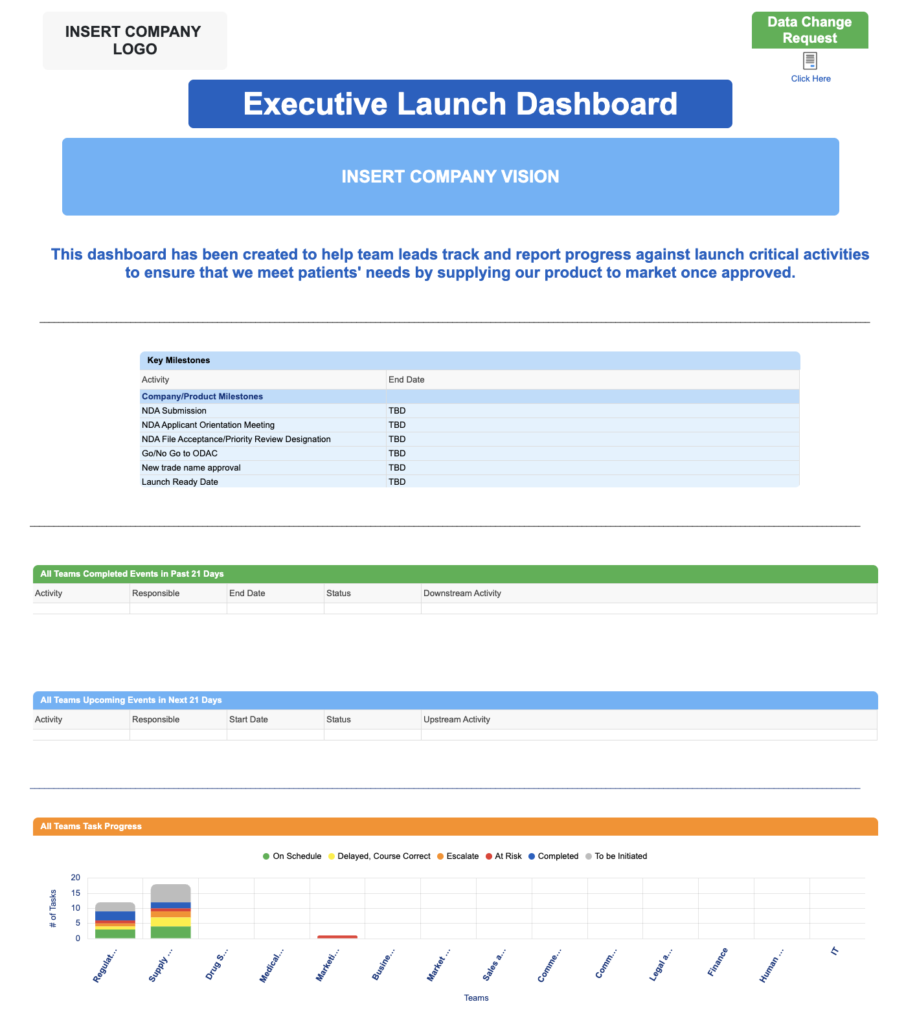
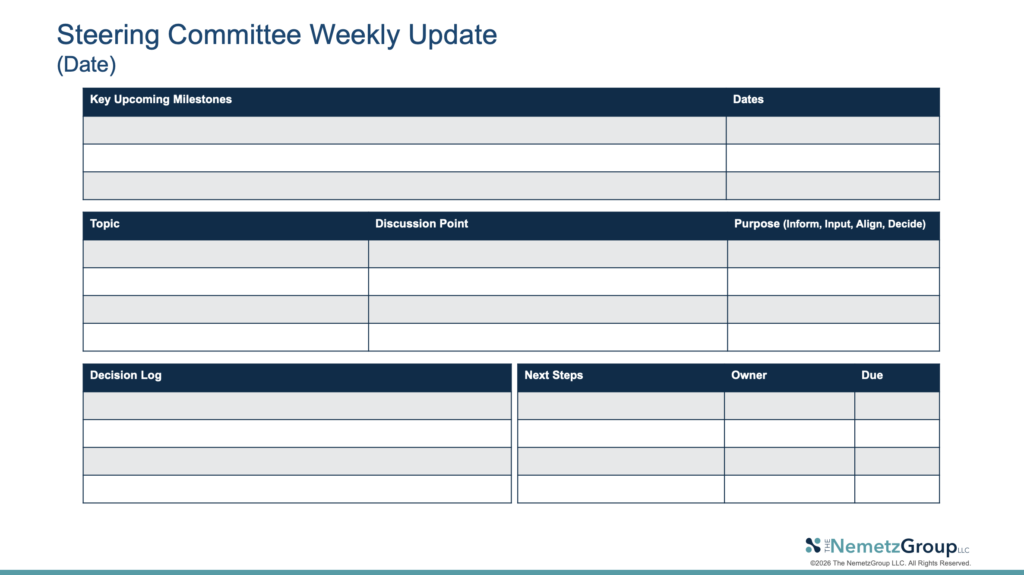
Status updates with no decisions needed or simple FYIs could easily be a dashboard, an email, or even a quick recorded video for people to watch on their own. Ask trusted colleagues for feedback or conduct mini-surveys. We are also big fans of using Smartsheet and other online tools to send automatic update requests, allowing everyone to read the latest without having to hear every update.
Dashboards can be especially helpful for cross-functional team updates, alleviating meeting burden, and ensuring emails are quick and actionable. Here’s a snapshot of one of the many dashboards in our toolkit that might work for your team.
The Email That Should Have Been a Meeting (In-Person, Video, Hybrid)
The cost of not holding essential meetings to reach decisions can be high: delayed impact, relationship erosion, and missed opportunities to leverage team members’ past experience, among them. In general, meetings are especially important when there are:
- Complicated tradeoffs
- Strategic decisions with broad implications
- Areas where there is (or could be) conflict or misalignment
- Items requiring real-time dialogue rather than a binary answer
In these cases and others like them, a well-structured meeting with the right people will get you to an aligned decision faster.
Even so, nobody wants more meetings. So, when you have a question, challenge, or opportunity, first consider whether there’s an established forum where you could add it as an agenda item. If so, you’ve just turned it into a focused discussion with the right stakeholders. Otherwise, a meeting might be the right call.
The Importance of Teams
Teams often play a significant role in effective communication. Granted, not all work involves formal teams, but much of it does. Here as well, there are potential pitfalls when teams are not utilized to their full capacity.
A few suggestions…
- Structure and accountability matter. Maintain forward-looking agendas with assigned owners, hold members accountable for participation, post minutes with actions and decisions on your designated platform.
- Connection drives engagement. Allow pre-meeting chat time for team bonding and use creative, interactive methods to generate energy and solve challenges.
- Stay focused on objectives. Keep discussions aligned with meeting goals; maintain efficiency by moving overly detailed or unrelated topics to separate forums.
- Identify collaborative tools that allow for asynchronous review and workflow to reduce didactic updates.
Used well, teams establish focused, collaborative spaces where clear communication leads to better decisions and real progress.
Final Thoughts
There’s no perfect formula for communication. But being more intentional about how we share information makes a real difference. Choosing the right forum helps organizations move faster, avoid unnecessary friction, and stay aligned on what matters most.
If you need some tips to increase the impact of your communications, all that’s required is a quick internet search. There are endless resources available. (We are always happy to help brainstorm as well.)
In biopharma, where decisions are complex and the stakes are high, clear and rapid communication directly affects our ability to deliver for patients. Getting this right isn’t about saving time for its own sake; it’s about doing our work well.